



Neuropeptide FF Receptor
Neuropeptide FF Receptor
Neuropeptide FF Receptor (NPFFR) is a type of G Protein-Coupled Receptor (GPCR) belonging to the RFamide receptor subfamily, specifically binding to neuropeptide FF (NPFF) and its analogous peptides (such as NPAF, NPSF).
NPFFR has two subtypes: NPFFR1 (GPR147) and NPFFR2 (GPR74), and these receptors regulate a variety of physiological functions, including modulation of pain, opioid side effects, feeding, drug reward, anxiety, cardiac function, and control of insulin release, among others.
Based on its pleiotropic functions, NPFFR is considered a potential target for the treatment of chronic pain, opioid dependence, metabolic diseases (such as obesity), and anxiety disorders[1][2].
Alle Neuropeptide FF Receptor Isoform-spezifische Produkte anzeigen
All Product Categories
-
Neuropeptide FF Receptor Verwandte Produkte (21)
Verwandte Produkte (21)

-
Neuropeptide FF Receptor Isoform Comparison
- 1
- 2
-
Neuropeptide FF
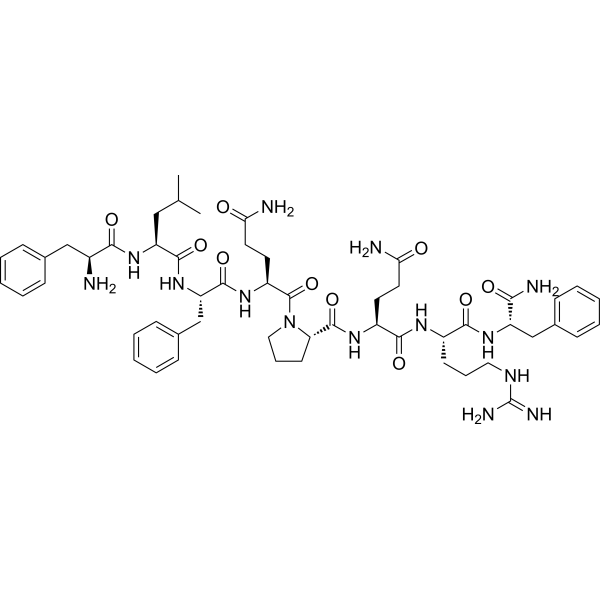 0 ImagesSynonyms: NPFFNeuropeptide FF (NPFF), an octapeptide belonging to the RF-amide family of peptides, is a NPFF1 and NPFF2 receptors agonist with Ki values of 2.82 nM and 0.21 nM, respectively. Neuropeptide FF induces abstinence syndrome, exerts antiopioid and analgesic effects, releases via calcium-dependent mechanisms from rat spinal cord, regulates memory, autonomic function, and neuroendocrine function, modulates pain and opioid antinociception, reduces food intake, stimulates water intake, alters cardiovascular parameters, and shows differential activity in hypothalamic paraventricular nucleus neurons. Neuropeptide FF is present in mammalian central nervous system and periphery, with NPFF-immunoreactivity increases in rat cerebrospinal fluid during opiate tolerance, and its NPFF gene and NPFF-R2 gene are up-regulated in rat spinal cord and dorsal root ganglia during peripheral inflammation. Neuropeptide FF can be used for the research of opioid tolerance, morphine-induced analgesia, abstinence syndrome, pain, hypertension, nociception, inflammatory pain, and neuropathic pain.
-
AC-263093 free base
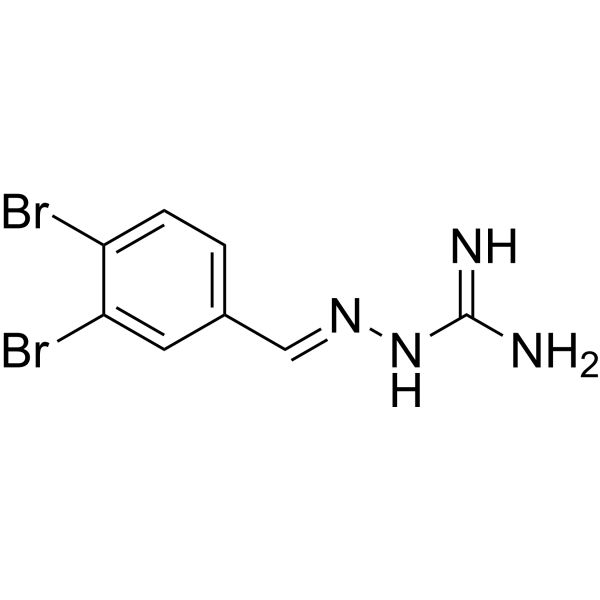 0 ImagesSynonyms: AC-093AC-263093 free base (AC-093) is a NPFFR2 agonist and a NPFFR1 functional antagonist, with pKi values of 6.9 and 7.0, respectively. AC-263093 free base selectively activates NPFFR2 (and inhibits NPFFR1) coupled to Gai/o proteins, thereby inhibiting adenylyl cyclase to reduce cAMP production. AC-263093 free base can be used for research on depression and anxiety-like disorders, inflammatory and neuropathic pain, and opioid tolerance.

-
palm11-PrRP31 TFA
 0 ImagesArt. -Nr.: HY-P10380AReinheit: 99.44%palm11-PrRP31 TFA is a lipidized endogenous appetite inhibitory neuropeptide (PrRP) analogue. palm11-PrRP31 TFA is GPR10 (EC50=39 pM) and NPFF-R2 effective dual agonists. palm11-PrRP31 TFA is able to mimic the natural function of PrRP by binding to these receptors to reduce food intake. palm11-PrRP31 TFA can be used as a potential anti-obesity agent and for the study of neuropeptide-receptor interaction.
-
NPFF1-R antagonist 1
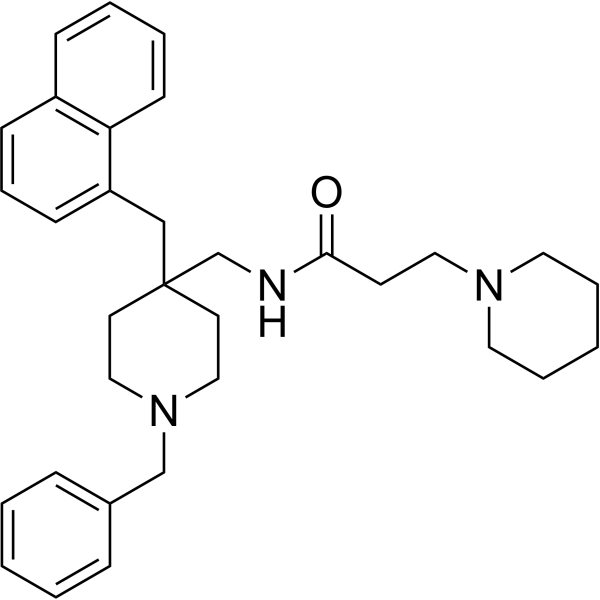
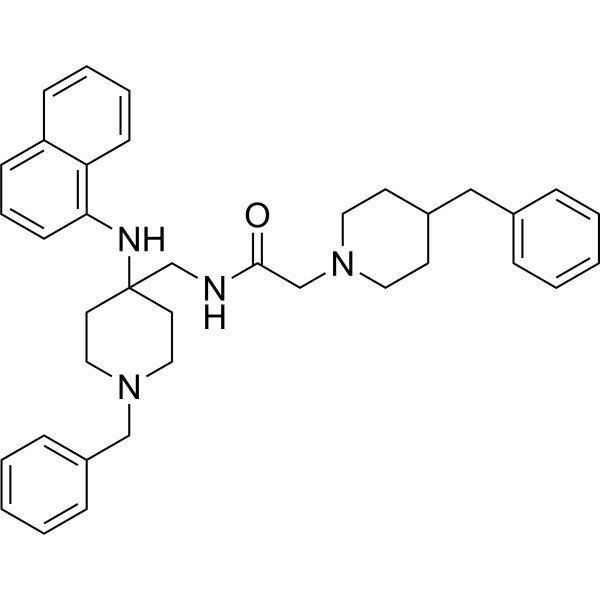 0 ImagesNPFF1-R antagonist 1 (compound 8b), a piperidine analogue, is a potent neuropeptide FF (NPFF) receptor antagonist. NPFF1-R antagonist 1 is 15-fold selective for the NPFF1-R subtype, with Ki values of 211 nM and 3270 nM for NPFF1-R and NPFF2-R, respectively.

-
GUB10194 acetate
 0 ImagesArt. -Nr.: HY-P11811AReinheit: 98.75%GUB10194 acetate is a fully potent and selective GPR10 agonist with an EC50 of 15 nM. GUB10194 acetate does not significantly affect body weight or food intake.
-
AC-099 hydrochloride
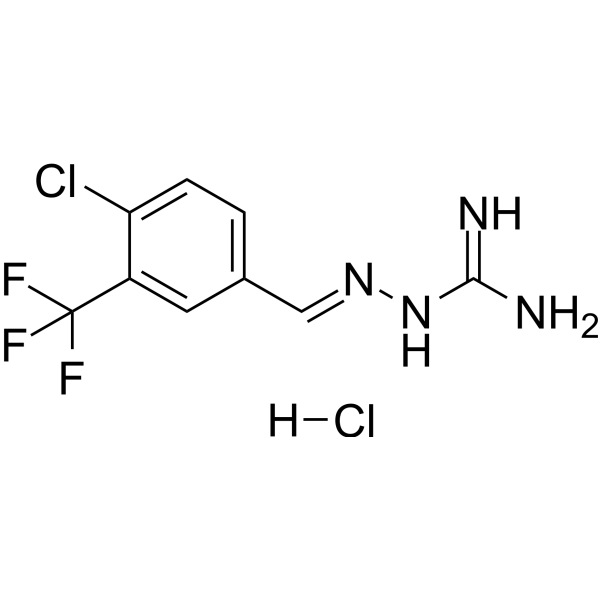 0 ImagesAC-099 hydrochloride (compound 3) is a selective NPFF2R full agonist (EC50=1189 nM) and NPFF1R partial agonist (EC50=2370 nM). AC-099 hydrochloride attenuates spinal nerve ligation-induced hypersensitivity in rats.
-
DP50
 0 ImagesArt. -Nr.: HY-P10395DP50 is a bifunctional compound that contains an opioid receptor (MOP) agonist and a neuropeptide FF receptor (NPFFR) antagonist. DP50 can be used in analgesia-related research.
-
GUB08248 acetate
 0 ImagesArt. -Nr.: HY-P11810AReinheit: 98.86%GUB08248 acetate is a full GPR10 agonist and a partial NPFF2R agonist, with EC50 values of 0.5 nM and 2.5 nM, respectively. GUB08248 acetate inhibits food intake and induces sustained weight loss. GUB08248 acetate can be used in obesity-related research.
-
palm-PrRP31
 0 ImagesArt. -Nr.: HY-P10379palm-PrRP31 is a potent dual receptor agonist for both GPR10 (EC50=72 pM) and NPFF-R2. palm-PrRP31 activates downstream signaling pathways through binding to its receptors, GPR10 and NPFF-R2, which results in reduced appetite and increased energy expenditure. Utilizing palm-PrRP31 facilitates the study of the mechanism of action in the nervous system, thereby elucidating the complex biological processes that regulate appetite and energy expenditure.
-
Neuropeptide FF (5-8)
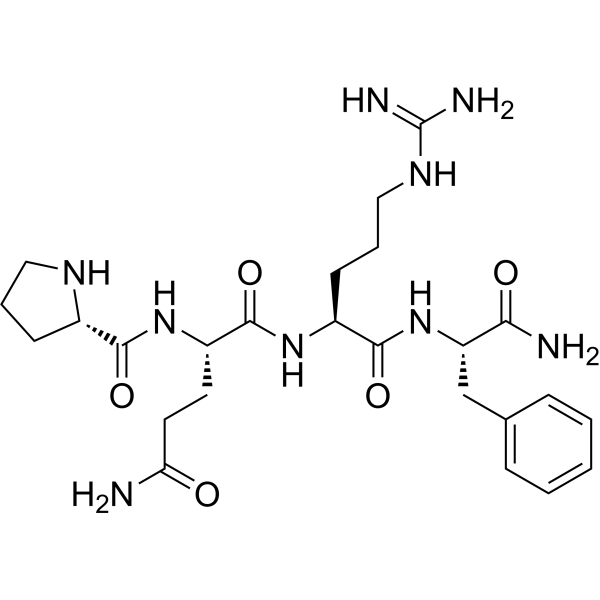 0 ImagesArt. -Nr.: HY-P3873CAS. Nr.: 152050-35-6Neuropeptide FF (5-8) is a Neuropeptide FF (HY-P1248)-related peptide. Neuropeptide FF (5-8) with a sequence of Q-P-Q-R-F-NH2 and a Ki value of 20.9 nM.
-
Prolactin-Releasing Peptide (12-31), bovine
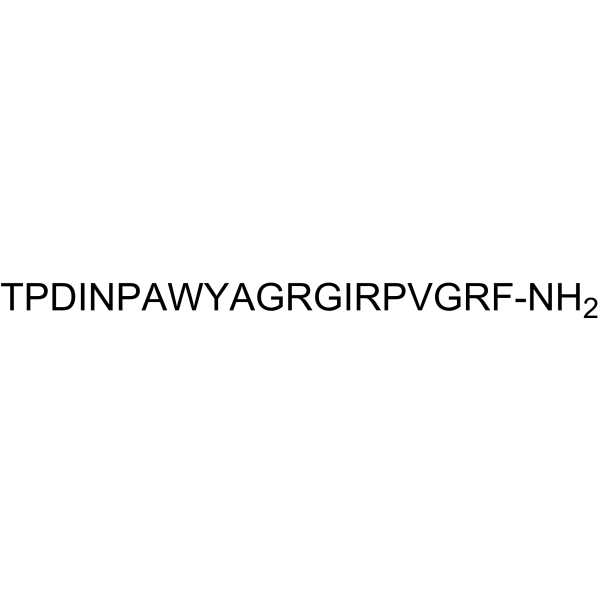 0 ImagesArt. -Nr.: HY-P3945CAS. Nr.: 209466-90-0

-
palm11-PrRP31
 0 ImagesArt. -Nr.: HY-P10380palm11-PrRP31 is a lipidized endogenous appetite inhibitory neuropeptide (PrRP) analogue. palm11-PrRP31 is GPR10 (EC50=39 pM) and NPFF-R2 effective dual agonists. palm11-PrRP31 is able to mimic the natural function of PrRP by binding to these receptors to reduce food intake. palm11-PrRP31 can be used as a potential anti-obesity agent and for the study of neuropeptide-receptor interaction.
-
RFRP-3 (mouse)
 0 ImagesArt. -Nr.: HY-P10780Reinheit: 98.82%Synonyms: Neuropeptide NPVF (mouse)RFRP-3 (mouse) is a functional ortholog of avian gonadotropin inhibitory hormone (GnIH), binding to GPR147. RFRP-3 (mouse) reduces Progesterone synthesis by inhibiting FSHR and key enzymes involved in steroidogenesis (P450scc, 3β-HSD, StAR). RFRP-3 (mouse) induces Apoptosis (increase of p53). RFRP-3 (mouse) also suppresses the ERK signaling pathway. RFRP-3 (mouse) can be used for research of follicular development.
-
DP32
 0 ImagesArt. -Nr.: HY-P10394CAS. Nr.: 2376306-14-6DP32 is a bifunctional compound that contains an opioid receptor (MOP) agonist and a neuropeptide FF receptor (NPFFR) antagonist. DP32 can be used in analgesia-related research.
-
NPFFR2 modulator-1
 0 ImagesArt. -Nr.: HY-186010CAS. Nr.: 1958076-30-6
-
AC-099
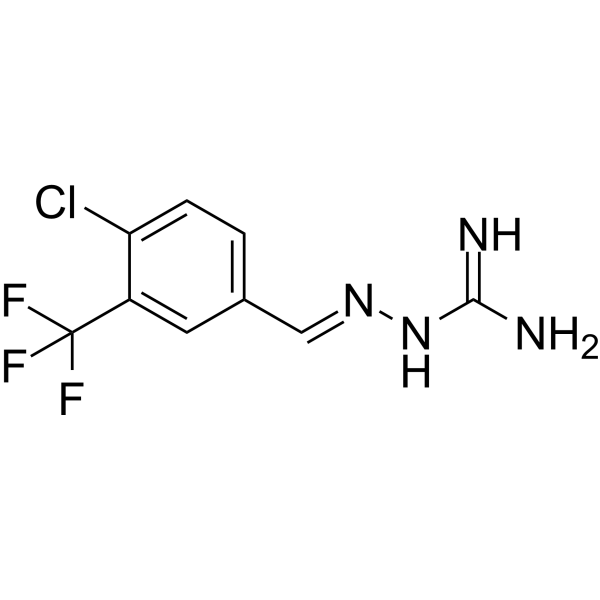 0 ImagesArt. -Nr.: HY-154829CAS. Nr.: 849459-88-7AC-099 (compound 3) is a selective NPFF2R full agonist (EC50=1189 nM) and NPFF1R partial agonist (EC50=2370 nM). AC-099 attenuates spinal nerve ligation-induced hypersensitivity in rats.
- 1
- 2



